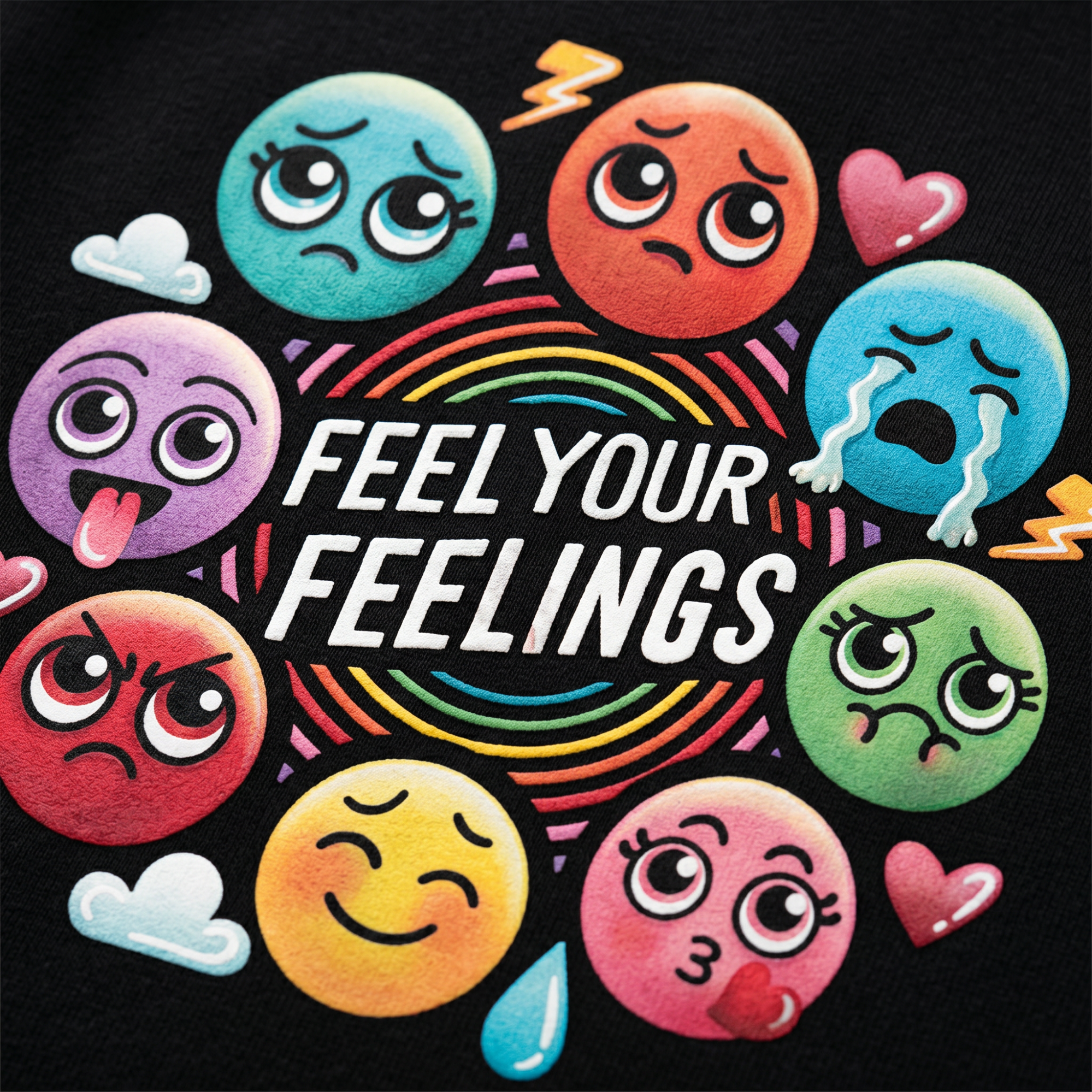

Mental health language moved onto our clothing, and it says something bigger about where the culture is headed.
A few years ago, putting "anxiety" on a t-shirt would have read as oversharing. Today it reads as a Tuesday. Somewhere in the last stretch of cultural time, the private vocabulary of therapy, the words we used to whisper in waiting rooms, climbed out of the clinical world and onto crewnecks, tote bags, and the chests of people in line for coffee. I design that clothing for a living, so I have had a front-row seat to the shift, and I think it is one of the more telling cultural trends of the moment.
This is not really a fashion story. It is a story about what a culture decides is sayable out loud, and clothing is just where that decision becomes visible.
Clothing has always been the culture's quietest billboard
Long before mental health showed up on apparel, clothing was how people announced what they belonged to and what they believed. Band shirts, protest pins, slogan tees, the whole history of wearing your allegiances. What is new is not the impulse to broadcast identity through what we wear. It is the content of the broadcast.
For most of modern history, the acceptable things to wear on your body were external: your team, your brand, your taste, your wealth. Wearing your internal experience, your struggle, the state of your nervous system, was not on the menu. The recent trend of people doing exactly that represents a genuine cultural turn. We have moved from advertising what we own to admitting what we feel, and we are doing it on the most public surface available, our own clothing.
Why now: the trend underneath the trend
A few cultural currents converged to make this happen, and understanding them matters more than the apparel itself.
The first is the slow collapse of mental health stigma, accelerated by a generation that grew up discussing therapy as casually as their parents discussed the weather. When the conversation became normal, the merchandise followed, because merchandise always trails the conversation.
The second is a hunger for authenticity that the culture cannot seem to satisfy. People are exhausted by curated perfection, and there is something quietly radical about wearing a phrase that admits you are a work in progress. In a feed full of highlight reels, "I am doing my best" printed plainly on a shirt reads as honesty, and honesty has become its own status symbol.
The third is connection. A phrase about anxiety or healing on a stranger's shirt functions as a small flare sent up into a crowd, a way of finding your people without having to say anything. The clothing does the vulnerable part for you. That is a genuinely new social function for an old object.
What this signals for anyone watching where culture moves
If you track cultural and market trends, the wearable-mental-health moment is worth reading as more than a niche. It is an early, visible signal of a larger shift in what consumers want their purchases to do. People are increasingly choosing products that say something true about who they are and what they are going through, rather than products that simply signal taste or status.
The brands and creators who will define the next stretch of culture are the ones who understand that people are no longer only buying things. They are buying language for experiences they have struggled to name. They are buying permission to be honest in public. The object is almost incidental. What sells is the feeling of being understood, and the willingness to say the quiet thing out loud on a customer's behalf.
I do not think this trend reverses. Once a culture decides that an experience is sayable, it rarely goes back to silence. The specific phrases will change, the aesthetics will cycle the way all aesthetics do, but the underlying move, toward wearing the inside on the outside, feels less like a fad and more like a door that has opened and will stay open.
The bigger picture
The most interesting trends are never really about the product. The clothing is just the place where a quieter cultural shift became something you could see and buy. What people are actually doing when they wear their feelings is testing a new agreement with each other, that it is allowed now, that you can name the hard thing in public and be met with recognition instead of discomfort.
That agreement is still being written. But you can already read the early drafts of it walking down any street, printed plainly on the chests of people who, not long ago, would have kept it to themselves.